
Electronics
A control board designed for the equipment: relays, motor drivers, protected inputs and temperature measurement.
Hardware · Edge · Cloud
From the control board to the cloud, built by one team. We design the electronics, the firmware, the operating system, the panel application and the cloud platform for a piece of industrial equipment.
For equipment makers (OEMs) that want a full technology partner, not only a parts supplier.
01 / Architecture
Each layer has one job. The board keeps the machine safe. The edge computer shows the panel and stores the data. The cloud manages the fleet. Data goes up, commands come down, always in the same order.
AI and computer vision models running on the equipment’s own computer. It decides on site, without waiting for the network, and sends only what matters to the cloud.
Fleet, telemetry, remote commands, updates and remote support. Each unit has its own identity and its own certificate.
Touch interface, local database and a local MQTT bus. It works offline. Only one process talks to the board.
Linux computer with a 7-inch touchscreen. FeralOS, our own system image, boots straight into the panel, with no desktop.
Dedicated microcontroller with its own firmware. It drives the loads, reads inputs and temperatures and keeps the machine safe even without the computer.
Motors, fans, locks, valves, door switches and temperature probes.
02 / The board
Safety lives in a dedicated microcontroller, apart from Linux. The board switches the loads, reads the sensors and applies the safety rules. If the edge computer stops answering, the board puts the outputs in a safe state.
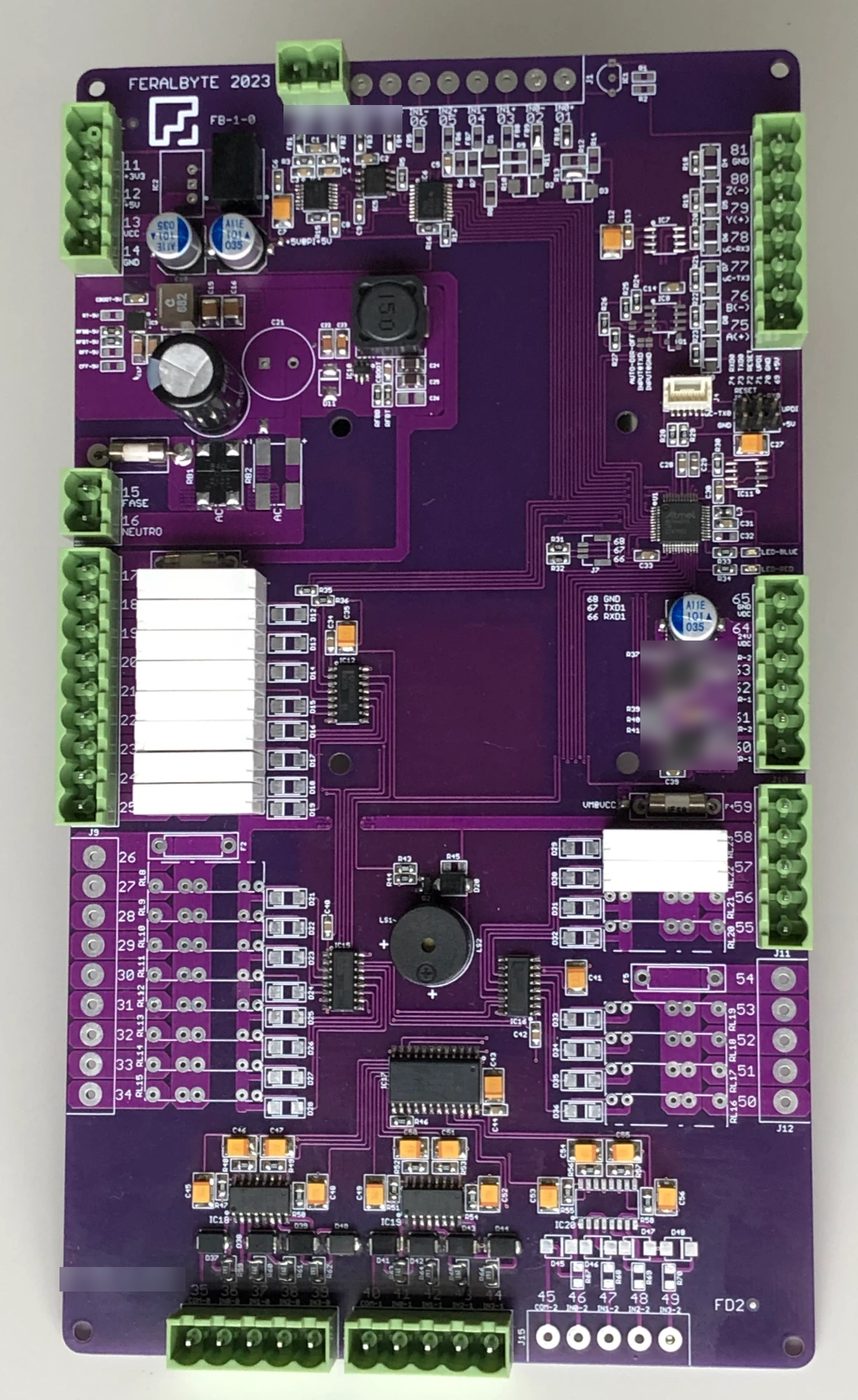
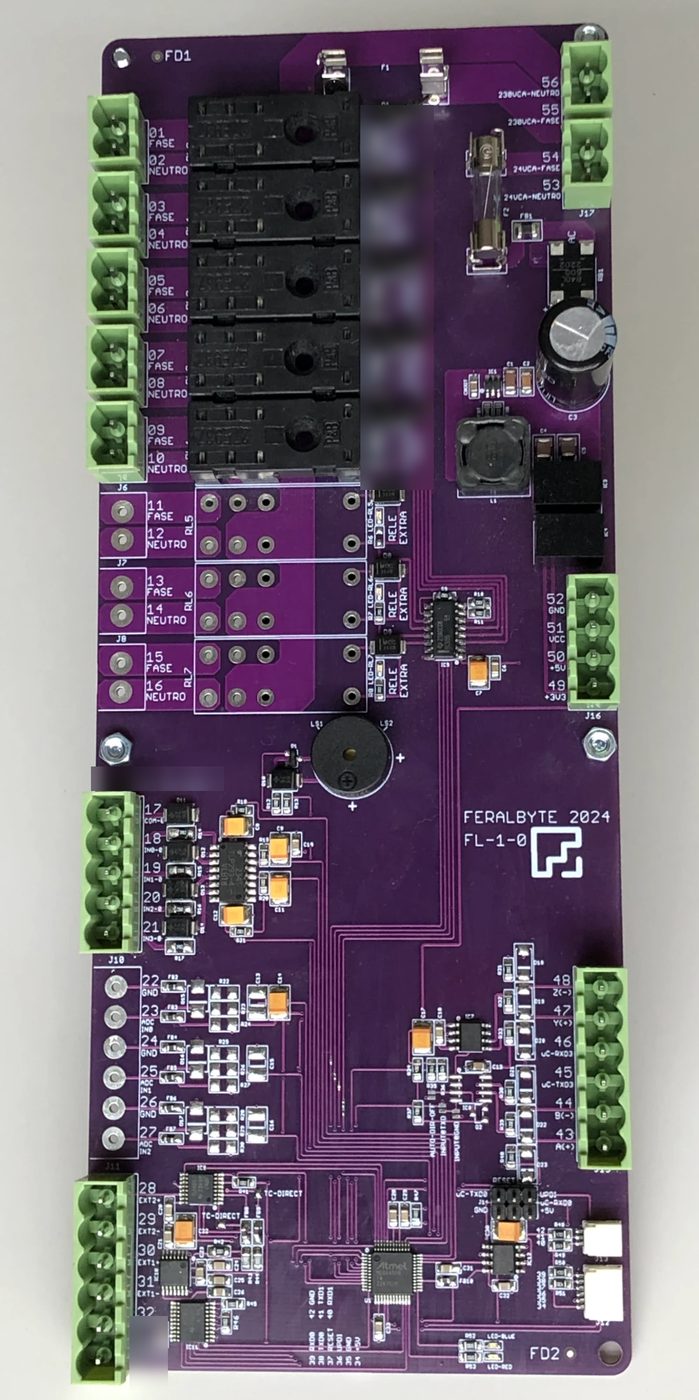
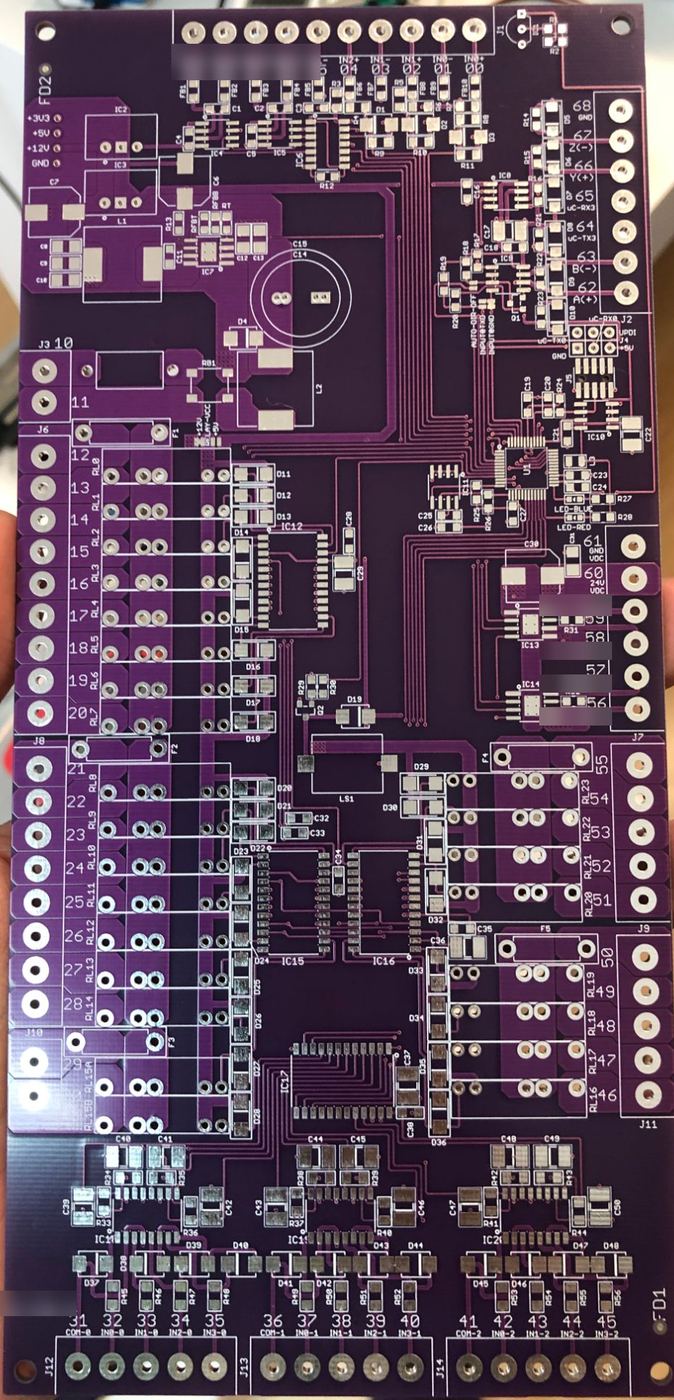
Photos of boards designed by Feralbyte. Some silkscreen labels have been blurred.
03 / The panel
A 7-inch portrait touchscreen on a stand with a fixed 25° tilt. Feralbyte designs the enclosure. The panel boots FeralOS straight into the panel application.
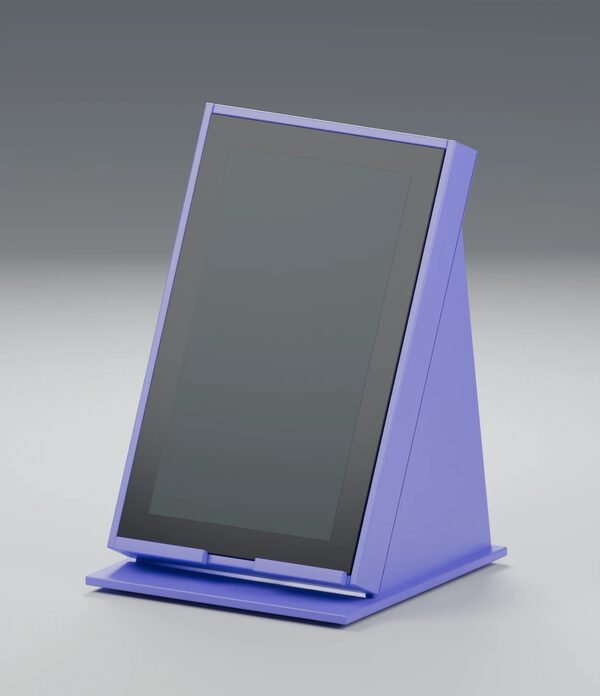
Tap a part or use “Separate parts” to see how the panel goes together.
3D model of the enclosure, exported from the design model.
04 / What we deliver
An equipment maker brings the machine and the process know-how. We bring the whole digital layer, and we maintain it over the years.
A control board designed for the equipment: relays, motor drivers, protected inputs and temperature measurement.
Safety logic in the microcontroller, a stable protocol with the edge computer and calibration stored on the board.
FeralOS: a reproducible Linux image with kiosk mode, network, time, USB and remote screen access.
Touch panel with programs, alarms, logs and settings. It works offline, from the local database.
Sync, telemetry, remote commands with an allow-list, back office and remote support.
Signed packages, from the cloud or by USB. They refuse older versions and roll back if the new version does not start correctly.
Board simulators for the software team and tools to program and test boards in the factory.
Feralbyte’s experience in computer vision and AI, running on the computer inside the equipment. The next step, on the same base.
05 / What we learned
The microcontroller keeps the machine safe. Linux handles the screen, the data and the sync, and it can restart with no danger. When the computer stops answering, the board switches off the critical loads.
The equipment never waits for the network. It works from its local database, keeps changes in a queue and sends them when the link is back. Telemetry is deleted on the equipment only after the cloud confirms it received it.
Fixed-size messages travel between the board and the computer, each one checked. A bad message is ignored and the last valid state is kept. When the hardware changes, the format stays compatible with older software.
On an edge computer, storage wear is the hidden risk. The system image caps the size of the logs and cuts the writes to disk.
Remote access, the USB stick and the rollback to the previous version are tested like any other feature. The graphics stack went through five options before it settled: write down the constraints first (touch, rotation, remote access), then choose.
Tell us which machine you build and what you need it to do. We tell you which layers we can design, integrate or maintain for you.